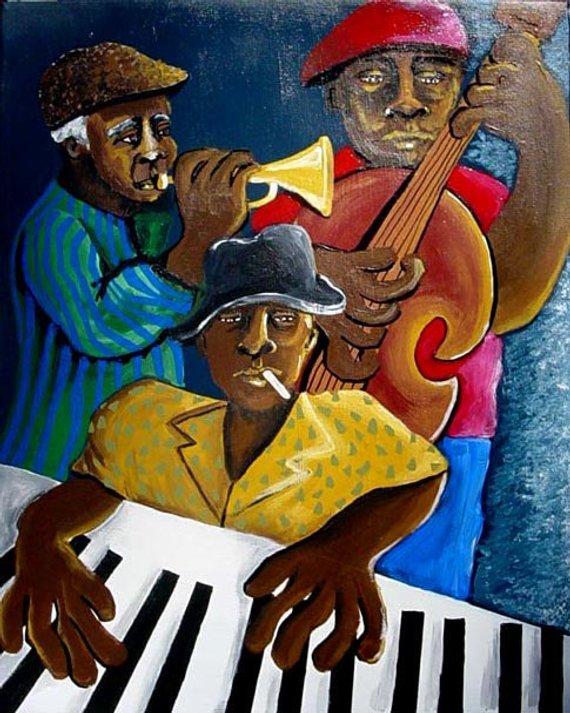
Retrieved from https://www.etsy.com/listing/99632364/
By: Madeline Thorne
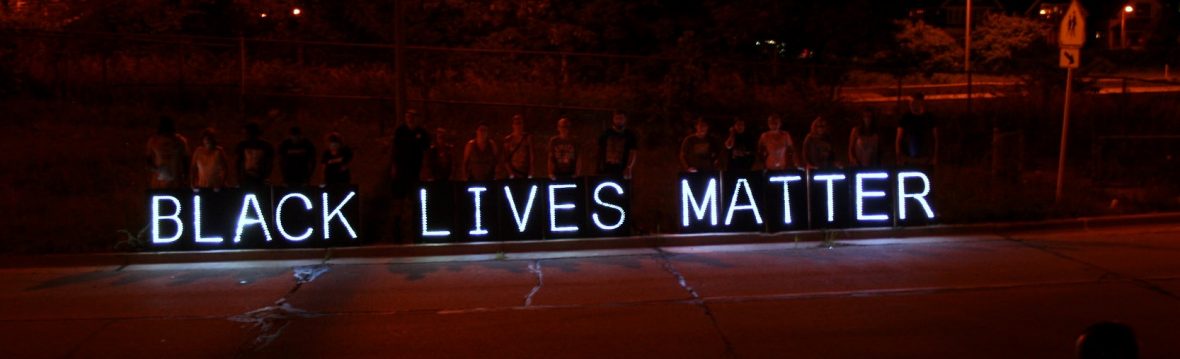
Throughout the ages music has been a way to communicate to larger audiences. In fact, artists have used music to express some of their frustrations with society. The biggest frustration that can be seen in music is the battle for racial equality with African Americans. Race can be defined as “a group of persons related by common descent or heredity” (“Race,” n.d.). Race is also a system of classification that has enabled society to belittle the African American population by grouping them together and forming stereotypes. However, by using the lens of race and Ebony Miranda from Black Lives Matter, one is able to hear and understand African American suffrage though music which in turn motivates the audience to stand up and solve the issue.
Before looking into music today it is important to see where the issue first began. The issue of racial discrimination first began when Americans started enslaving African Americans. This then quickly led to an Indiana senator in 1850 bluntly stating how whites and African Americans “never live together upon an equality is as certain as that no two antagonistic principles can exist together at the same time” (Takaki, 2008, p. 101). In this quote the senator is separating the two races in order to place white people into a position of power. By placing white people in a position of power they were then able to take away African Americans Agency which only makes the issue worse. Once more people started adopting this system of separation by skin color pretty soon most of society started to treat African Americans as less then others with white skin. Popular African American artist Billie Holiday responded to this injustice in her song “Strange Fruit” where she states “Black bodies swinging in the southern breeze” (2011).
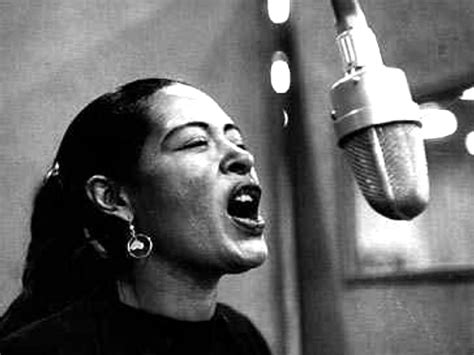
Here she is referencing to the lynchings in the southern states when the civil rights movement was promoting equality. However, what is really powerful about the song is the sound itself. The entire song is very somber and distraught which only further shows the pain African Americans went through when white people discriminated then based off their race. By expressing the pain racial discrimination caused in the form of music not only is she able to stress the importance of the issue but provoke an emotional response from the audience to stand up and fight. Library of Congress adds onto the power and purpose of music by saying “They sang these songs for multiple purposes: to motivate them through long marches, for psychological strength against harassment and brutality” (”Music in the Civil Rights Movement,” n.d.). Meaning, that artists such as Billie Holiday used their music not just as a way to communicate the hardships of racial discrimination but to give African Americans a voice. And by providing this group a people a voice they are able to empower the community to stand together to fight which only further helps reach the goal of racial equality.
While music has still remained to empower Africans Americans and express their pain, the sound and general tone of music has shifted dramatically. For instance, as mentioned before songs such as “Strange Fruit” has a very somber sound that got the audience to feel empathetic towards this group of people. However, when looking at music today the songs sound more angry and upset. Popular song, “This is America” by Childish Gambino calls out the injustice specifically when it states “this is America, don’t catch you slippin’ up” (2018).
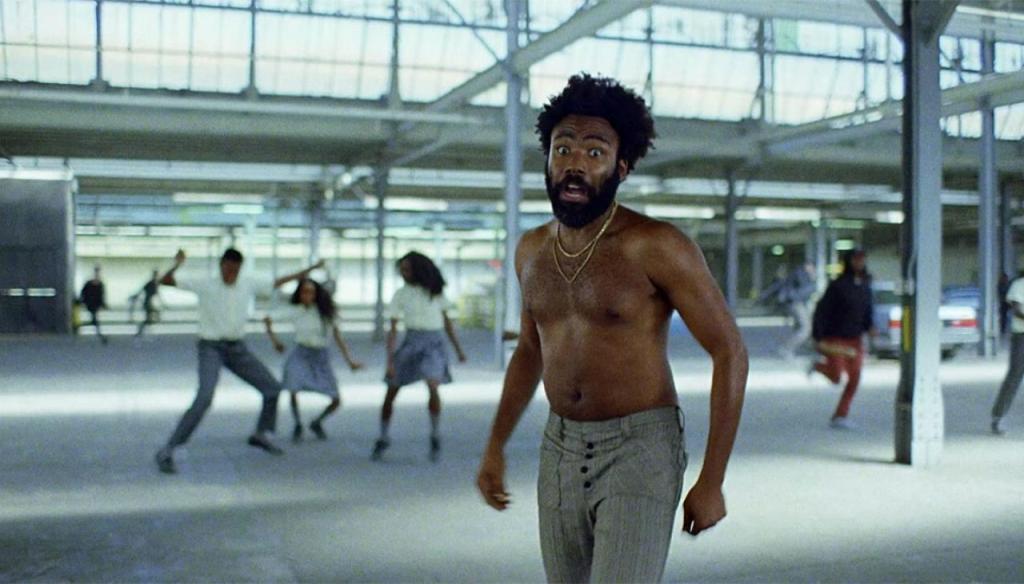
Here the song is basically saying that as an African American one cannot afford to make a mistake due to the fact that it could lead to someone getting hurt or even killed. This result of discrimination has been going on for a very long time but songs like these are calling out this injustice and further communicating that it’s time to fix the problem. What is very interesting about this song is the angry tone that sounds fed up with waiting for society to change. This change in tone from somber to angry just shows how long Africans Americans have waited for society to change. Despite the slowness of change in society there have been improvements. For example, the song “This is America” was voted song of the year for 2019 which means a lot of people are hearing about the racial discrimination which also means more people are going to be motivated to stand up and fight. Ebony Miranda from Black Lives Matter adds a unique perspective onto the relationship between music and the movement when she stated that “an uprising in political action has inspired artists to incorporate more imagery and lyrical content that relates to BLM” (2019).
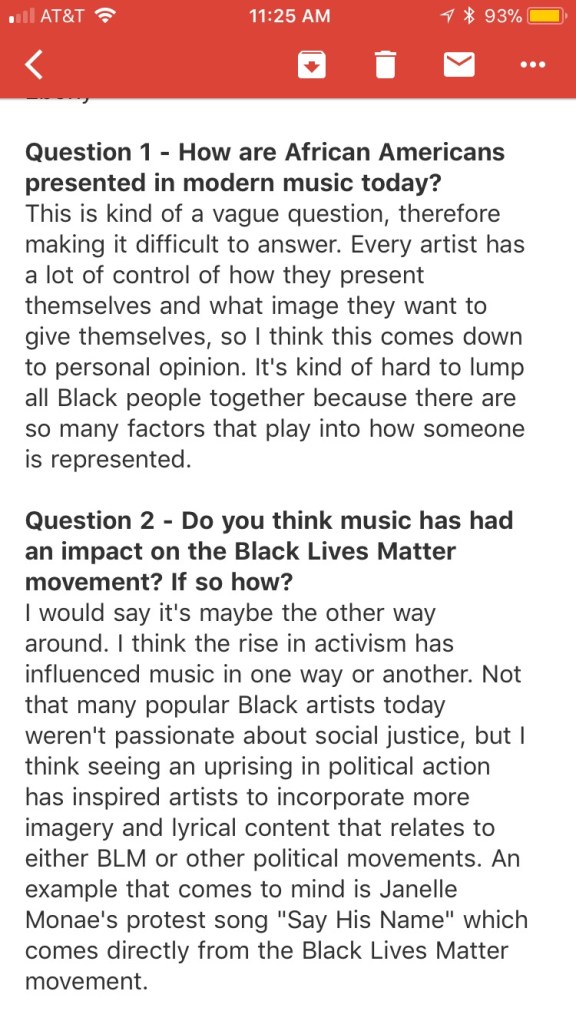
Meaning, as the years go by more and more artists are speaking out against racial discrimination in American society. And through talking about the issue more people will hopefully join the movement through standing up against the issue in their own community or joining an organization such as Black Lives Matter. Overall, popular music today is still being used to talk about and fight the issue of racial discrimination in hopes of changing the outdated ways of society.
In the end, through the lens of race and insight from Ebony Miranda, it can be proven that music has been a way for African Americans to speak out against the discrimination and motivate others to stand up and change the outdated ways of American society. The days of idly sitting down quietly while this injustice continues are over. In fact, “we delude ourselves if we believe that our card conveys the same meaning as our broken and whispered words when we are present” (Postman, 2006, p. 117). Here Postman is trying to convey the simple fact that it’s time to stop talking about taking action and saying the simple “im so sorry.” Instead, people need to stand up and take action because without action racial discrimination will continue to exist. Ebony Miranda suggests that a great way to take action is to join a local Black Lives Matter chapter. Through a chapter an individual will be given the chance to help take action to stop racial discrimination. If every individual were to do this not only would they be improving their own community but finally make America not just the land of the free but the land of equality for all.
Black Lives Matter Seattle:
Email: info@blacklivesseattle.org
Phone Number: 253-234-7250
This blog post contains possible copyright material that is used for educational purposes regarding the portrayal of race in American music. We are able to use this material on this website because of the Digital Millenia Act of 1998 that added on new regulations regarding digital copyright laws. However, this blog post is compliant with the copyright laws due to the fact that the material used gives proper credit to the original authors and the information used is for educational purposes only.
References:
Glover, D. (2018, May 5). This is america [Video file]. Retrieved from https://www.youtube.com/watch?v=VYOjWnS4cMY
Miranda, E. (2019, March 2). [E-mail interview by M. Thorne, M. Brewster, S. Nehme, & P. Picardat].
Music in the civil rights movement. (n.d.). Retrieved March 13, 2019, from Library of Congress website: https://www.loc.gov/collections/civil-rights-history-project/articles-and-essays/music-in-the-civil-rights-movement/
Postman, N. (2006). Media as epistemology. In Amusing ourselves to death: Public discourse in the age of show business (p. 117). New York: Penguin Books.
Race. (n.d.). Retrieved March 13, 2019, from Dictionary.com website: https://www.dictionary.com/browse/race
Strange fruit [Video file]. (2011, December 22). Retrieved from https://www.youtube.com/watch?v=Web007rzSOI
Takaki, R. (2008). The hidden origins of slavery. In A different mirror: A history of multicultural america (p. 101). New York: Back Bay Books.
 AMERICAN MUSIC